

Tag Archives: signet

Crusader-Period-Iron-Signet-Ring-Jerusalem-Find-Circa-12th-13th-Century-AD-01-fkqo

Crusader Period Iron Signet Ring, Jerusalem Find, Circa 12th-13th Century AD

Crusader Period Iron Signet Ring, Jerusalem Find, Circa 12th-13th Century AD

Crusader Period Iron Signet Ring, Jerusalem Find, Circa 12th-13th Century AD
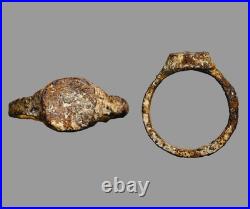
Crusader Period Iron Signet Ring, Jerusalem Find, Circa 12th-13th Century AD. Certified Authentic Ancient Artifact. Culture: Crusader (Latin Kingdom of Jerusalem). Type: Administrative Signet Ring. Size: US Ring Size 7. Provenance: Jerusalem find; Private collection; acquired by me in 2024. A rugged and historically evocative Crusader-period iron signet ring, recovered from the Jerusalem region. The ring features a circular, raised bezel and a sturdy hoop that expands toward the shoulders. While the high iron content has resulted in heavy archaeological oxidation, the profile is characteristic of the functional, everyday signets used by the Frankish settler population, merchant classes, or lower-tier military personnel in the Latin East. In the 12th and 13th centuries, iron was a common material for personal signets among those who required a durable tool for sealing wax on trade manifests and local correspondence. Despite the surface corrosion, the ring’s robust construction reflects the militarized and practical nature of life in the Crusader states. Authentication Notes (Ancient Surface and Tool Assessment). Iron Mineralization: The surface exhibits a dense, multi-layered “concretion” of iron oxides and compacted soil. This type of heavy, stable oxidation only occurs after centuries of anaerobic burial in the specific mineral conditions found in and around the Old City of Jerusalem. Forged Construction: The hoop and bezel show the slight irregularities of manual blacksmithing. Unlike modern cast iron, ancient wrought iron was hammered into shape, leading to the distinct “organic” profile seen in the side view. Morphological Wear: The interior of the hoop shows significant thinning at the base, a result of decades of continuous wear against the finger in antiquity before it was lost or buried. Bezel Geometry: The raised, circular platform is a classic high-medieval form, designed to press a deep, clear impression into hot beeswax or lead bullion seals. Cultural and Artistic Context. Following the First Crusade, Jerusalem became a hub of Western European administration in the heart of the Levant. While the elite wore gold and silver, the vast majority of the “Franks” (as the Crusader settlers were known) relied on iron for their functional jewelry. An iron signet was a mark of a “free man”-someone with the legal right to sign documents and engage in contract-based trade. Finding such a piece in Jerusalem connects it directly to the bustling administrative and military life of the Holy City during the Middle Ages. Tower of David Museum, Jerusalem (Medieval iron finds from the Citadel excavations). The Israel Museum, Jerusalem (Crusader-period functional metalwork and daily life artifacts). The British Museum, PE 1856,0701.2185 (Medieval iron finger rings). Jewelry in the Latin Kingdom of Jerusalem, Section: Iron and Base Metal Adornments. Jerusalem in the Time of the Crusades, p. 155-160 (On material culture and daily tools). The iron is heavily oxidized but remains structurally sound. The concretion is stable and provides a direct physical link to its long burial in the Jerusalem soil.
Crusader Period Iron Signet Ring, Jerusalem Find, Circa 12th-13th Century AD
Judaean-Bronze-Calligraphic-Signet-Ring-with-Aramaic-Pseudo-Kufic-Inscription-01-xpvi

Judaean Bronze Calligraphic Signet Ring with Aramaic / Pseudo-Kufic Inscription

Judaean Bronze Calligraphic Signet Ring with Aramaic / Pseudo-Kufic Inscription

Judaean Bronze Calligraphic Signet Ring with Aramaic / Pseudo-Kufic Inscription
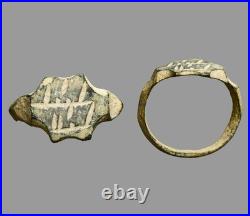
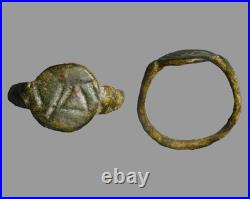
Judaean Bronze Calligraphic Signet Ring with Aramaic / Pseudo-Kufic Inscription (Circa 8th-11th Century AD) US Size 7 Authentic. This artifact is certified authentic and will be accompanied by a Certificate of Authenticity and Provenance. All professional inventory is vetted through recognized platforms to ensure legal standing. Object: Calligraphic / Administrative Signet Ring. Culture: Early Islamic / Post-Byzantine Levant (Judaea). Form: Hexagonal/scalloped bezel with incised linear script across a central ground, flanked by pointed shoulders and an integrated hoop. Ring Size: US Size 7. Region: Judaea / Holy Land Finds. Epigraphic Analysis: The Administrative Seal. This US Size 7 bronze signet ring represents the ongoing epigraphic traditions of the Levant during the Early Middle Ages. The Inscription & Bezel: The distinct scalloped, six-pointed bezel features a multi-line linear inscription divided by a prominent horizontal baseline. Executed in a stylized, geometric script-typical of late Aramaic influence or early angular Kufic-it served as a personal name seal or administrative token for marking clay and wax. Architectural Shoulders: The bezel is framed by raised, pointed triangular shoulders that transition smoothly into a rounded band, offering structural reinforcement for pressing seals into documents or jar stoppers. Function: Personal signets were essential items in merchant and civic life across early medieval Judaea, functioning as portable signatures to secure contracts, goods, and personal correspondence. Overview and Historical Context. Following the administrative transitions in the Holy Land from Byzantine to Islamic rule, local workshops continued to produce bronze signets for a diverse population. The blend of traditional regional ring architectures with early epigraphic scripts highlights the continuous commercial vitality of Judaean trade centers like Jerusalem, Ramla, and Tiberias. This ring stands as a tangible survivor of daily economic and administrative activity in the region. Patina: Displays a well-preserved, layered mottled dark forest-green and slate patina, highlighted by heavy, natural cream-colored earthen caliche settled deep within the incised characters. Mineralization: Authentic copper-oxide pitting and micro-crystallization are present across the band and under the bezel, consistent with long-term burial in mineral-rich Levantine soil. Construction: Exhibits manual casting marks and subtle hand-finished asymmetry along the profile of the hoop and shoulders. The Israel Museum, Jerusalem: Collections of Early Islamic and Late Antique personal bronze signet rings from Levantine site excavations. The British Museum, London: Accession No. 1917,0501.812 (Bronze signet rings with geometric and calligraphic bezels from the Near East). Museum of Islamic Art, Cairo: Holdings of early medieval bronze personal seals and inscribed rings from the Levant. The bronze is structurally sound and rigid, making the ring fully wearable. The epigraphic script is deeply cut and remains exceptionally crisp under a natural, museum-grade patina.
Judaean Bronze Calligraphic Signet Ring with Aramaic / Pseudo-Kufic Inscription
Ancient-Roman-Bronze-Signet-Ring-Initial-M-Marcus-Size-6-Authentic-Antiquity-COA-01-ssz

Ancient Roman Bronze Signet Ring Initial M Marcus Size 6 Authentic Antiquity COA

Ancient Roman Bronze Signet Ring Initial M Marcus Size 6 Authentic Antiquity COA

Ancient Roman Bronze Signet Ring Initial M Marcus Size 6 Authentic Antiquity COA
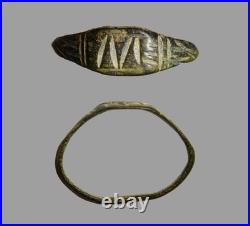
Ancient Roman Bronze Signet Ring Initial M Marcus Size 6. Authentic Ancient Artifact – Certificate of Authenticity Included. Material: Bronze Ring Size: 6 Region: Roman Empire Date: 1st-3rd Century AD Type: Personal Signet Ring. Ancient Roman bronze signet ring engraved with a bold central letter “M” framed by vertical linear borders. Single-letter signet rings were widely used across the Roman world as personal identifiers. The letter most commonly represents the owner’s praenomen, with “M” typically standing for Marcus, one of the most prevalent Roman names throughout the Republic and Empire. The elongated oval bezel and restrained geometric shoulders are characteristic of Roman utilitarian signet forms. Such rings were used to impress wax seals on documents, goods, and correspondence, functioning as both jewelry and legal signature. The simplicity of the design reflects Roman emphasis on identity and authority through initials rather than elaborate imagery. Roman citizens frequently wore engraved rings bearing their initials. Marcus was among the most common names in Roman society, used by senators, soldiers, merchants, and administrators alike. This ring represents the tangible personal identity of a Roman individual nearly two millennia ago. Surface patina consistent with age. Wear patterns consistent with prolonged ancient use. Engraving depth natural and not mechanically cut. No visible modern casting seams. Minor surface wear consistent with antiquity.
Ancient Roman Bronze Signet Ring Initial M Marcus Size 6 Authentic Antiquity COA
Ancient-Near-Eastern-Phoenician-Bronze-Signet-Ring-Inscribed-Paleo-Hebrew-Letter-01-ip

Ancient Near Eastern Phoenician Bronze Signet Ring Inscribed Paleo-Hebrew Letter

Ancient Near Eastern Phoenician Bronze Signet Ring Inscribed Paleo-Hebrew Letter

Ancient Near Eastern Phoenician Bronze Signet Ring Inscribed Paleo-Hebrew Letter
Ancient Near Eastern Phoenician Bronze Signet Ring Inscribed Paleo-Hebrew Letter Mem 500BC Size 7 Authentic. Authentic ancient artifact, guaranteed genuine and accompanied by a Certificate of Authenticity. Near Eastern / Levantine Find. Culture: Ancient Near Eastern (Phoenician / Levantine Horizon). Date: Circa 6th-5th Century BC c. Material: Bronze (Copper Alloy). Type: Personal Seal / Signet Ring. Size: Ring Size 7 Approx. 17.3 mm Inner Diameter / Bezel Diameter approx. This is an authentic, highly significant ancient Near Eastern bronze signet ring measuring a wearable US size 7, dating to the pivotal historic period around 500 BC. This era reflects the rich cultural and trade intersections across the ancient Levant and coastal Phoenicia. The ring features a prominent, flat circular bezel displaying a deeply incised, bold Northwest Semitic character rendered in the classic archaic Paleo-Hebrew / Phoenician script. The letter is a beautifully executed Mem (??), defined by its characteristic zig-zag or wavy horizontal head and sharp, downward diagonal stem. In the ancient Near East, the letter Mem translates conceptually to “water” (Mayim). On personal signet rings, a single bold letter of this type served a vital practical purpose as a personal monogram or official seal for a merchant, administrator, or local elite. It would be pressed directly into soft clay or wax seals (bullae) to finalize trade contracts, secure storage jars, or validate official correspondence. The construction is classic pre-Hellenistic Near Eastern smithing, featuring a robust, hand-forged hoop that integrates seamlessly into a thick, flat setting. The artifact is presented in an outstanding, completely uncleaned archaeological condition. The solid bronze module has developed a beautiful dark olive-green and chocolate-brown “river” patina, heavily highlighted by a stable, cream-colored calcareous soil matrix and light traces of reddish iron oxide deep within the engraved letter recesses. Inscription:?? (Archaic Semitic Letter Mem). Script Type: Phoenician / Paleo-Hebrew / Old Aramaic. Function: Personal or administrative monogram seal representing a prominent name beginning with the “M” phonetic sound (such as Mattan, Menahem, or Miqa), or denoting a specific administrative office or cargo standard. The signet ring demonstrates flawless diagnostic indicators of genuine antiquity. The incised Mem character displays the characteristic manual chisel stops and microcrystalline wear within the grooves, which are tightly packed with genuine ancient soil matrix compacted to stone-like hardness over twenty-five centuries. Under magnification, the hoop shows the slight asymmetry and hand-hammered texture of ancient manual construction rather than modern precision casting or industrial wire drawing. No modern seams, mechanical file marks, or artificial chemical washes are present. Comparable Examples & References. Inscribed personal signet rings from the 1st Millennium BC Levant are highly coveted documents of early epigraphy. Extensive collections of Northwest Semitic seals, rings, and stamped bullae can be studied in the permanent West Semitic Antiquities galleries at the Louvre Museum in Paris and the Israel Museum in Jerusalem. For deep typological classification of ancient Levantine signets, collectors can consult Nahman Avigad and Benjamin Sass’s definitive corpus Corpus of West Semitic Stamp Seals, as well as Joseph Naveh’s Early History of the Alphabet. Excellent archaeological condition, presenting an entirely stable and authentic as-found surface. The ring retains its full structural integrity, a perfectly round and exceptionally robust finger hoop, and maximum legibility of the engraved script. The thick, multi-layered mineral patina seals the core entirely, preserving this exquisite piece of ancient personal property so that it remains fully wearable today.
Ancient Near Eastern Phoenician Bronze Signet Ring Inscribed Paleo-Hebrew Letter
Ancient-Norse-Viking-Early-Medieval-Silver-Signet-Ring-Artifact-Antiquity-wCOA-01-phwf

Ancient Norse Viking / Early Medieval Silver Signet Ring Artifact Antiquity wCOA

Ancient Norse Viking / Early Medieval Silver Signet Ring Artifact Antiquity wCOA

Ancient Norse Viking / Early Medieval Silver Signet Ring Artifact Antiquity wCOA
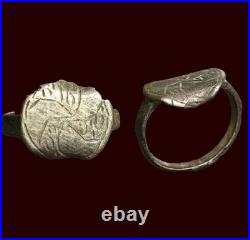
Ancient Norse Viking / Early Medieval Silver Signet Ring with Engraved Symbol – Circa 9th-11th Century AD – Germanic Find / US Size 3 Guaranteed genuine authentic ancient artifact with a Certificate of Authenticity. Culture: Norse / Viking (Early Medieval Germanic) Date: Circa 9th-11th Century AD Material: Solid Silver (High-Grade Alloy) Type: Personal Signet Ring / Totemic Symbol Ring Design: Broad, Flattened Oval Bezel Deeply Incised with an Interlocking Geometric/Zoomorphic Symbol Size: US Ring Size 3. Description An exceptional, museum-grade ancient Viking silver signet ring dating from the height of the Norse expansion, circa 9th to 11th Century AD, recovered from a Germanic regional find context. This highly important personal ornament features an expansive, hammered oval bezel that seamlessly integrates into a sturdy, tapering hoop. As visible in the provided image 7. Jpg, the primary face of the bezel is hand-engraved with an intriguing, deeply incised symbol composed of interlocking linear strokes and stylized fronds-forming a dynamic geometric or proto-heraldic zoomorphic motif characteristic of early northern European tribal markers. The solid silver has stabilized beautifully over the centuries, displaying a magnificent, authentic horn-silver coloration with deep charcoal-toned tarnish in the recessed areas. The hand-cut grooves of the symbol and the sheltered inner contours of the hoop retain clear traces of an untouched, rock-hard dark mineralized burial matrix, providing superb visual definition and striking contrast against the bright, reflective metallic surfaces. Historical & Epigraphic Context During the Viking Age, silver was the primary currency and status indicator across the Norse and Germanic worlds. While silver arm rings and ingots were frequently hacked apart for bullion trade (hack-silver), finely crafted personal signet rings were prized possessions belonging to elite merchants, warriors, or regional chieftains. These rings served as symbols of swearing oaths, indicators of social status, and functional stamp devices to mark property or trade goods. The distinctive abstract carving on this specimen reflects the traditional artistic transition away from complex Carolingian forms toward bold, linear, geometric expressions of family, tribal, or cultic allegiance popular in the Baltic and Germanic trade zones. Exact typological parallels for Early Medieval and Norse silver signet rings of this form, material composition, and period are preserved in major global institutions. Specific comparative specimens include. The British Museum, London: Department of Britain, Europe and Prehistory / Viking Age Collection cf. Museum Number BM 1915,1208.2 / Silver finger ring with stamped and incised decoration. The National Museum of Denmark (Nationalmuseet), Copenhagen: Danish Prehistory and Viking Treasures Corpus cf. NM-V-3819 for silver signet rings from regional hoards. The State Archaeological Museum (Archäologisches Landesmuseum), Schleswig: Gottorf Castle Viking Age Registry cf. ALM-1988,241 for personal silver ornaments recovered from Hedeby and North Germanic contexts. This remarkably preserved artifact represents an incredibly rare, intimate, and tactile link to the personal identity, seafaring trade networks, and metalworking mastery of the Viking world. Condition & Authenticity Condition: Excellent archaeological condition. The high-grade silver structure is entirely solid, stable, and completely intact, featuring a strong, unbroken hoop. The hand-engraved symbol on the bezel remains crisp, deep, and fully legible without any modern paring or aggressive cleaning. The ring exhibits perfect diagnostic signatures of ancient Norse smithing, including manual hammering, edge shaping, and hand-chiseled engraving. The deep silver-sulfide tarnish and fused micro-matrix are entirely consistent with over a thousand years of interment.
Ancient Norse Viking / Early Medieval Silver Signet Ring Artifact Antiquity wCOA
Crusader-Order-Bronze-Signet-Ring-Eagle-and-Shield-Templar-Era-1100AD-Authentic-01-ltr

Crusader Order Bronze Signet Ring Eagle and Shield Templar Era 1100AD Authentic

Crusader Order Bronze Signet Ring Eagle and Shield Templar Era 1100AD Authentic

Crusader Order Bronze Signet Ring Eagle and Shield Templar Era 1100AD Authentic
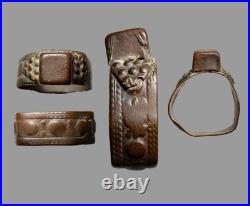
As with all items in this collection, this artifact is. And will be accompanied by a. Certificate of Authenticity and Provenance. Detailing typology, dating, region, and collection history. Crusader Order Bronze Signet Ring Eagle and Shield Templar Era 1100AD Authentic Antiquity. Authenticity Notice Guaranteed authentic medieval bronze signet ring from the Crusader period. Acquired from an old European collection. Details Culture: Crusader / Latin Christian Order Date: Circa 11th-12th century AD Material: Bronze Type: Heraldic signet ring Ring Size: 9-9.5 Bezel: Rectangular shield form Condition: Complete, strong relief, ancient wear. Overview This powerful medieval bronze signet ring displays formal Crusader heraldic symbolism executed in a bold, early style. The rectangular shield bezel is flanked by deeply incised eagle imagery on the shoulders – a symbol of authority, vigilance, and divine favor widely used in Crusader and knightly order contexts. The band further incorporates raised dot motifs and linear framing, elements commonly associated with martial identity, rank, and oath-bound brotherhood. The ring’s heavy construction, angular bezel, and integrated heraldic program strongly indicate use by a member of a Crusader military order or knightly retinue, rather than a civilian owner. Rings of this type functioned as personal seals, authority markers, and status identifiers, used to authenticate documents and assert allegiance. Authenticity Check The ring exhibits correct medieval bronze fabric, hand-cut decorative elements, casting irregularities, and long-term wear consistent with genuine Crusader-period use. Patination, corrosion, and edge rounding are natural and uninterrupted. No modern tooling, casting seams, or artificial aging are present. Iconography and construction align with documented Crusader and Templar-era signet rings. Comparable Examples Comparable Crusader order signet rings with eagle symbolism and shield bezels are preserved in major collections such as the British Museum and other medieval European institutional holdings, catalogued as knightly or military order rings of the Crusader era. Further Reading Egan & Pritchard, Medieval Finds from Excavations in London Oakeshott, Arms and Armour of the Crusading Era British Museum Collection Online. Condition Very good for type. Devices remain clearly legible with honest medieval wear and stable patina.
Crusader Order Bronze Signet Ring Eagle and Shield Templar Era 1100AD Authentic