
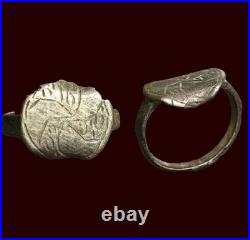




Ancient Norse Viking / Early Medieval Silver Signet Ring with Engraved Symbol – Circa 9th-11th Century AD – Germanic Find / US Size 3 Guaranteed genuine authentic ancient artifact with a Certificate of Authenticity. Culture: Norse / Viking (Early Medieval Germanic) Date: Circa 9th-11th Century AD Material: Solid Silver (High-Grade Alloy) Type: Personal Signet Ring / Totemic Symbol Ring Design: Broad, Flattened Oval Bezel Deeply Incised with an Interlocking Geometric/Zoomorphic Symbol Size: US Ring Size 3. Description An exceptional, museum-grade ancient Viking silver signet ring dating from the height of the Norse expansion, circa 9th to 11th Century AD, recovered from a Germanic regional find context. This highly important personal ornament features an expansive, hammered oval bezel that seamlessly integrates into a sturdy, tapering hoop. As visible in the provided image 7. Jpg, the primary face of the bezel is hand-engraved with an intriguing, deeply incised symbol composed of interlocking linear strokes and stylized fronds-forming a dynamic geometric or proto-heraldic zoomorphic motif characteristic of early northern European tribal markers. The solid silver has stabilized beautifully over the centuries, displaying a magnificent, authentic horn-silver coloration with deep charcoal-toned tarnish in the recessed areas. The hand-cut grooves of the symbol and the sheltered inner contours of the hoop retain clear traces of an untouched, rock-hard dark mineralized burial matrix, providing superb visual definition and striking contrast against the bright, reflective metallic surfaces. Historical & Epigraphic Context During the Viking Age, silver was the primary currency and status indicator across the Norse and Germanic worlds. While silver arm rings and ingots were frequently hacked apart for bullion trade (hack-silver), finely crafted personal signet rings were prized possessions belonging to elite merchants, warriors, or regional chieftains. These rings served as symbols of swearing oaths, indicators of social status, and functional stamp devices to mark property or trade goods. The distinctive abstract carving on this specimen reflects the traditional artistic transition away from complex Carolingian forms toward bold, linear, geometric expressions of family, tribal, or cultic allegiance popular in the Baltic and Germanic trade zones. Exact typological parallels for Early Medieval and Norse silver signet rings of this form, material composition, and period are preserved in major global institutions. Specific comparative specimens include. The British Museum, London: Department of Britain, Europe and Prehistory / Viking Age Collection cf. Museum Number BM 1915,1208.2 / Silver finger ring with stamped and incised decoration. The National Museum of Denmark (Nationalmuseet), Copenhagen: Danish Prehistory and Viking Treasures Corpus cf. NM-V-3819 for silver signet rings from regional hoards. The State Archaeological Museum (Archäologisches Landesmuseum), Schleswig: Gottorf Castle Viking Age Registry cf. ALM-1988,241 for personal silver ornaments recovered from Hedeby and North Germanic contexts. This remarkably preserved artifact represents an incredibly rare, intimate, and tactile link to the personal identity, seafaring trade networks, and metalworking mastery of the Viking world. Condition & Authenticity Condition: Excellent archaeological condition. The high-grade silver structure is entirely solid, stable, and completely intact, featuring a strong, unbroken hoop. The hand-engraved symbol on the bezel remains crisp, deep, and fully legible without any modern paring or aggressive cleaning. The ring exhibits perfect diagnostic signatures of ancient Norse smithing, including manual hammering, edge shaping, and hand-chiseled engraving. The deep silver-sulfide tarnish and fused micro-matrix are entirely consistent with over a thousand years of interment.