

Tag Archives: roman

Roman-Bronze-Incendiary-Fire-Arrowhead-Phalarica-or-Malleolus-Type-Antiquity-01-ry

Roman Bronze Incendiary / Fire-Arrowhead (Phalarica or Malleolus Type) Antiquity

Roman Bronze Incendiary / Fire-Arrowhead (Phalarica or Malleolus Type) Antiquity

Roman Bronze Incendiary / Fire-Arrowhead (Phalarica or Malleolus Type) Antiquity
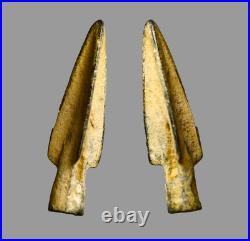
Roman Bronze Incendiary / Fire-Arrowhead (Phalarica or Malleolus Type) (Circa 1st-3rd Century AD) 35mm Authentic. This artifact is certified authentic and will be accompanied by a Certificate of Authenticity and Provenance. All professional inventory is vetted through recognized platforms to ensure legal standing. Object: Incendiary Arrowhead (Phalarica / Fire-Holding Bolt). Date: Circa 100-300 AD. Form: Trilobate / hollowed-channel projectile point designed to hold incendiary materials. Region: Imperial Roman Provinces / Frontier Finds. Typological Analysis: Ancient Incendiary Warfare. This 35mm bronze projectile is a specialized military point designed specifically for incendiary warfare. The Fire-Holding Design: Unlike conventional solid armor-piercing or barbed arrowheads, this point features deep, wide open channels along its faces. These recesses served as reservoirs to hold combustible pitch, tow, resin, or naphtha-soaked fibers without blowing out during flight. Tactical Function: Used primarily during siege operations or naval engagements, these “fire arrows” (malleoli) were fired into wooden fort structures, siege engines, or enemy sails to ignite blazes behind enemy lines. Socketed Base: Features a hollowed socket designed to take a wooden shaft, secured to withstand the violent launch forces from a composite bow or specialized torsion artillery frame. Overview and Historical Context. Incendiary weapons played a crucial role in Roman siegecraft and frontier defense. Classical authors like Ammianus Marcellinus describe the specialized construction of malleoli, noting that once ignited, the burning pitch contained within the recessed blades was extremely difficult to extinguish with water. This 35mm specimen is a remarkable survival of ancient tactical engineering, reflecting the specialized hardware used by Roman archers (sagittarii) across the garrisons of the Empire. Patina: Displays a well-preserved, layered desert-tan, sand-colored caliche, and olive-green patina, typical of long-term burial in mineral-rich soils. Mineralization: Deep-seated oxidation, heavy earthen deposits, and ancient pitting are deeply embedded within the fire-holding channels. Construction: Exhibits minor asymmetries in the blade casting and socket rim consistent with Roman field-armory production techniques. The British Museum, London: Accession No. 1883,1213.62 (Roman incendiary and trilobate military arrowheads). Römisch-Germanisches Zentralmuseum (RGZM), Mainz: Specialized holdings of Roman siege equipment and projectile points. Saalburg Roman Fort Museum, Germany: Extensive collection of military ironwork and bronze archer equipment from the Limes. Very fine archaeological condition. The bronze is structurally sound and rigid. The fire-holding channels are sharply defined, and the socket remains intact under a natural, museum-grade patina.
Roman Bronze Incendiary / Fire-Arrowhead (Phalarica or Malleolus Type) Antiquity
Antique-Dual-Relic-Rosary-St-Dominic-Tree-Wood-Roman-Catacomb-Earth-Box-Crucifix-01-mw

Antique Dual Relic Rosary St Dominic Tree Wood Roman Catacomb Earth Box Crucifix

Antique Dual Relic Rosary St Dominic Tree Wood Roman Catacomb Earth Box Crucifix

Antique Dual Relic Rosary St Dominic Tree Wood Roman Catacomb Earth Box Crucifix
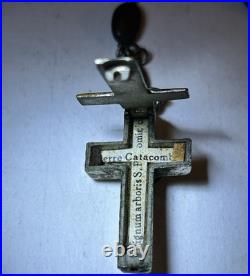
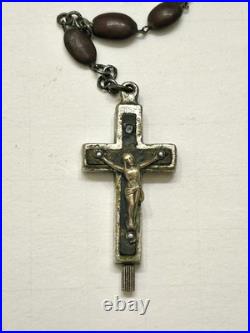
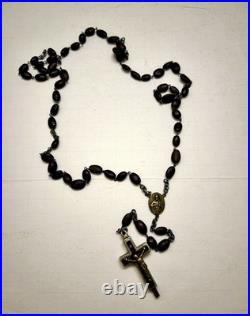
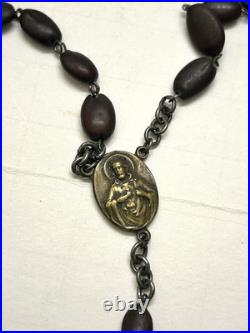
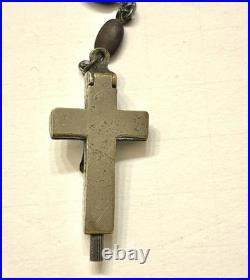
Up for sale is a beautiful and highly collectible antique Catholic reliquary rosary from the late 19th or early 20th century. This unique piece features a hidden-compartment “box” crucifix that holds two sacred third-class relics. The Hidden Relics: Unscrewing the pin at the bottom of the cross allows the front to swing open. Inside, a perfectly preserved, clear paper label identifies both relics: St. Dominic Wood: The vertical text reads Lignum arboris S. Dominici, holding a tiny sliver of wood from the historic orange tree planted by St. Catacomb Earth: The horizontal text reads “Terre Catacomb”, containing a small specimen of sacred soil from the Roman catacombs. The Beads: The loop is made of natural, dark brown Spina Christi (“Thorn of Christ”) seed beads. They have a beautiful, slightly irregular oval shape and are held together by a strong antique chain. It’s very likely this had a mark on the front of the crucifix at some point. Condition: Excellent antique condition. The screw and hinge mechanisms work smoothly and lock tightly. The metal has been left uncleaned to preserve its authentic, aged antique patina. All beads are present.
Antique Dual Relic Rosary St Dominic Tree Wood Roman Catacomb Earth Box Crucifix
Ancient-Roman-Bronze-Signet-Ring-Initial-M-Marcus-Size-6-Authentic-Antiquity-COA-01-ssz

Ancient Roman Bronze Signet Ring Initial M Marcus Size 6 Authentic Antiquity COA

Ancient Roman Bronze Signet Ring Initial M Marcus Size 6 Authentic Antiquity COA

Ancient Roman Bronze Signet Ring Initial M Marcus Size 6 Authentic Antiquity COA
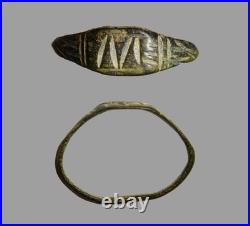
Ancient Roman Bronze Signet Ring Initial M Marcus Size 6. Authentic Ancient Artifact – Certificate of Authenticity Included. Material: Bronze Ring Size: 6 Region: Roman Empire Date: 1st-3rd Century AD Type: Personal Signet Ring. Ancient Roman bronze signet ring engraved with a bold central letter “M” framed by vertical linear borders. Single-letter signet rings were widely used across the Roman world as personal identifiers. The letter most commonly represents the owner’s praenomen, with “M” typically standing for Marcus, one of the most prevalent Roman names throughout the Republic and Empire. The elongated oval bezel and restrained geometric shoulders are characteristic of Roman utilitarian signet forms. Such rings were used to impress wax seals on documents, goods, and correspondence, functioning as both jewelry and legal signature. The simplicity of the design reflects Roman emphasis on identity and authority through initials rather than elaborate imagery. Roman citizens frequently wore engraved rings bearing their initials. Marcus was among the most common names in Roman society, used by senators, soldiers, merchants, and administrators alike. This ring represents the tangible personal identity of a Roman individual nearly two millennia ago. Surface patina consistent with age. Wear patterns consistent with prolonged ancient use. Engraving depth natural and not mechanically cut. No visible modern casting seams. Minor surface wear consistent with antiquity.
Ancient Roman Bronze Signet Ring Initial M Marcus Size 6 Authentic Antiquity COA
Old-Carnelian-Intaglio-Pendant-Moonlight-Romance-Erotic-Scene-Greek-Roman-01-mkx

Old Carnelian Intaglio Pendant Moonlight Romance Erotic Scene Greek Roman

Old Carnelian Intaglio Pendant Moonlight Romance Erotic Scene Greek Roman

Old Carnelian Intaglio Pendant Moonlight Romance Erotic Scene Greek Roman
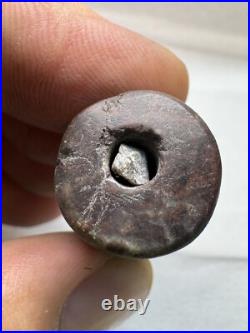
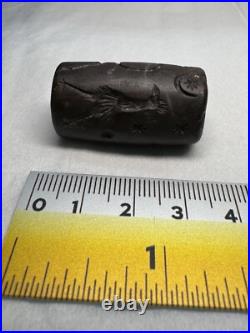
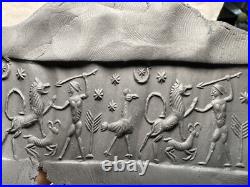
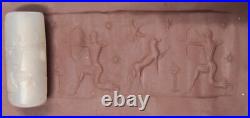
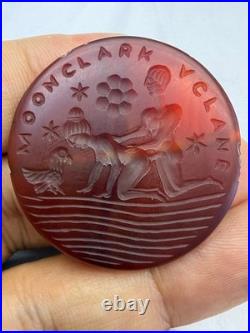
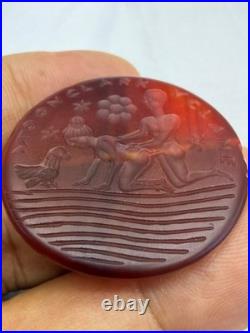
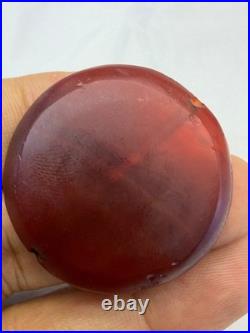
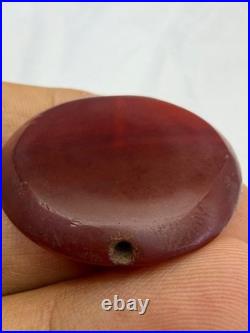
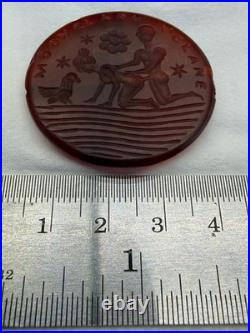
The product is an old Roman Carnelian intaglio pendant depicting a moonlight romance or erotic scene. Made in Afghanistan before 1400, this single bead features a detailed design that reflects the artistry and symbolism of the time period. With its unique historical significance and craftsmanship, this pendant would make a captivating addition to any collection or a striking statement piece for those with a love for ancient artifacts. Track Page Views With.
Old Carnelian Intaglio Pendant Moonlight Romance Erotic Scene Greek Roman
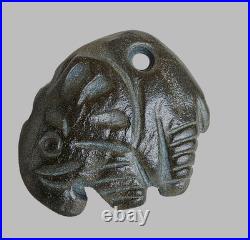
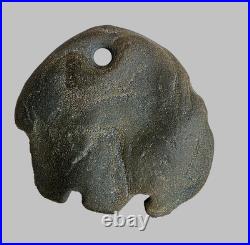
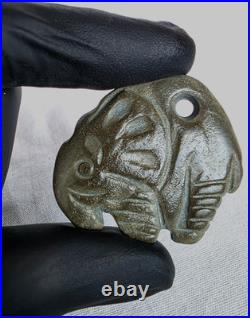
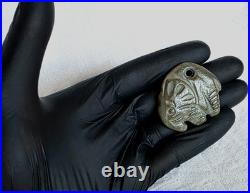
300-BC-Ancient-Roman-Carved-Engraved-Gemstone-Pendant-Medallion-Amulet-Elephant-01-lqm

300 BC Ancient Roman Carved Engraved Gemstone Pendant Medallion Amulet Elephant

300 BC Ancient Roman Carved Engraved Gemstone Pendant Medallion Amulet Elephant

300 BC Ancient Roman Carved Engraved Gemstone Pendant Medallion Amulet Elephant
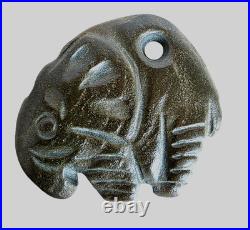
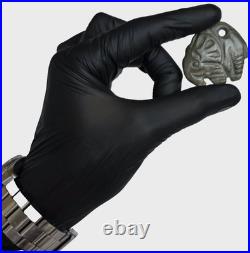
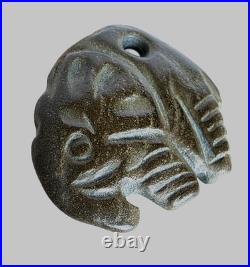
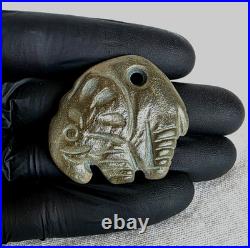
Please view the Video which available in the photos in this listing. This ancient Roman carved engraved gemstone pendant medallion amulet featuring an elephant design is a unique and authentic piece from 300 BC. The pendant is suitable for both men and women to wear, showcasing intricate Roman style and intaglio features that make it a standout collectible item. Originating from Italy, this piece is a timeless addition to any decorative collection. This is not just an amulet pendant. This ancient masterpiece is a symbol of strength authority. And power carrying energy and radiance for millennia. Protection and help in all. Guardian of family and home. Clears negative energy and tension. For wisdom and Wit – Clearing karma. Protects against natural disasters. Protector of nature and animals. You will never see such or a similar amulet for sale because each amulet is made from a pure natural piece of stone that has no similar analogue in nature and each stone is. ONE OF A KIND. This extremely unique amulet pendant is durable in all conditions – water – heat – cold – can be cleaned (please careful the item from strong impacts and dropping from a height on to a hard surface). Expertise of the materials. Odds are you’ll. Another come up for sale. Below in the listing description, for your convenience and security, is a. How to obtain a COA. Please print the description and photos (Photos of your choice), from the listing if desired (laminate) and apply the printed documents and Photos to the item. Is presented in its unaltered condition, with detailing of the features clearly visible, a relatively smooth surface, and a naturally aged patina, deep covered in molted variations of hues and colours as maintained. If you examine the enlarged photos of this. You’ll see that it has been meticulously crafted with stunning details. I’m confident that you’ll be 100% satisfied with this. Which is not only a beautiful work of art but also great antiquities. Thank you for considering our offerings, and we look forward to serving you!!! At our shop, we take pride in offering a unique collection of Ancient Artifacts of diverse cultures from different eras that are truly. That’s why we believe that whoever possesses one of these special. Can be considered to have true pride. We understand that our customers are discerning collectors who appreciate the value and significance of these rare artifacts. That’s why we make every effort to ensure that our collection is authentic and of the highest quality. We believe that owning one of these. Is not just a matter of acquiring a beautiful object, but also of connecting with a rich cultural tradition that spans centuries. So if you’re looking for a truly unique. To add to your collection – you are in the right place! Our inventory represents time-tested investment quality items with everlasting decorative beauty. We look forward to your business and appreciate any reasonable offers. All of our curated items are vetted and guaranteed authentic and as described. We only deals in original antiques and never reproductions. Please keep in mind that we are dealing with ancient and antique items. You should not expect ancient and antique items to be as brand new ones. They always have some degree of wearing. Please, take care to examine the photos and read descriptions. The photos are part of the description in this Listing. Dear Customers, you will receive exactly the same item which you see on the pictures, not similar or other. Please read the description carefully and review the photos. All items, which I sell, are captured with high – photographic equipment and the photos, which I insert in my auctions, are with high resolution. Photos are not further processed by specialized software! The pictures in listing are. So that you can perfectly identify all the details of item! Thank you for your time, I wish you successful and happy days.
300 BC Ancient Roman Carved Engraved Gemstone Pendant Medallion Amulet Elephant
Christian-Cross-Antiquity-Ancient-Eastern-Roman-Byzantine-Soldier-s-Buckle-01-adzf

Christian Cross Antiquity Ancient Eastern Roman / Byzantine Soldier’s Buckle

Christian Cross Antiquity Ancient Eastern Roman / Byzantine Soldier's Buckle

Christian Cross Antiquity Ancient Eastern Roman / Byzantine Soldier's Buckle
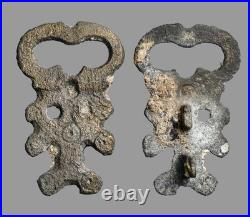
Eastern Roman / Byzantine Bronze Soldier’s Buckle (Circa 5th-7th Century AD) 45mm Authentic. Authenticity Notice This artifact is certified authentic and will be accompanied by a Certificate of Authenticity and Provenance. Object: Military Belt Buckle / Plate. Culture: Eastern Roman (Byzantine). Date: Circa 5th-7th Century AD. Form: Openwork loop integrated with a stylized plate featuring geometric “Eye” motifs. Region: Eastern Mediterranean / Byzantine Empire. Identification: Military Plate with “Magic Eye” Protection This 45mm bronze buckle represents a significant piece of military equipment from the early Byzantine period. The Design : The buckle features a broad loop and a decorative plate characterized by distinctive “Magic Eye” (Ring-and-Dot) motifs. These were common apotropaic symbols intended to ward off the “Evil Eye” and protect the wearer in battle. The Reverse : The back retains its original, robust attachment lugs used to secure the buckle to a thick leather military belt. Surface Detail : The obverse displays deep punch-work forming these protective “eyes, ” a decorative technique frequent in the 6th and 7th centuries across the Empire’s frontier provinces. Overview and Historical Context In the Eastern Roman Empire, the military belt was a primary symbol of status and state authority. This 45mm buckle belonged to a professional soldier and combines functional durability with the folk-magic symbols of the era. The use of “magic eyes” on military gear illustrates the personal superstitions and protective charms relied upon by soldiers stationed in high-conflict border regions. Patina : The artifact displays a superb, stable “Silver-Grey” to “Olive” patina, with localized patches of earthen mineralization and coppery highlights. Mineralization : There is deep-seated crystallization and characteristic “pitting” within the bronze, consistent with over 1,400 years of burial. Construction : The lugs on the reverse show genuine structural fatigue and manual finishing marks, distinguishing it from modern pressure-cast reproductions. The British Museum, London : Accession No. 1923,0512.446 (Byzantine bronze buckles with geometric punch-work). Dumbarton Oaks, Washington D. Significant collection of Early Byzantine military metalwork featuring ring-and-dot ornamentation. Metropolitan Museum of Art, New York : Accession No. 17.190.1666 (Eastern Roman bronze buckle types with apotropaic symbols). Schulze-Dörrlamm, Maria – Byzantinische GĂ¼rtelschnallen : The definitive typology for Byzantine belt buckles. Maguire, Henry – Byzantine Magic : For context on the use of “magic eyes” and protective symbols on daily objects. Condition Excellent archaeological condition. The bronze is dense and stable. The original mounting lugs remain intact, and the protective geometric motifs are clearly defined under a museum-grade patina.
Christian Cross Antiquity Ancient Eastern Roman / Byzantine Soldier's Buckle
Roman-Terracotta-Portrait-Bust-Septimius-Severus-200AD-Roman-Antiquities-COA-01-ihqr

Roman Terracotta Portrait Bust Septimius Severus 200AD Roman Antiquities COA

Roman Terracotta Portrait Bust Septimius Severus 200AD Roman Antiquities COA

Roman Terracotta Portrait Bust Septimius Severus 200AD Roman Antiquities COA
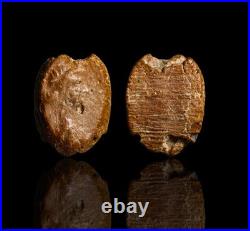
Roman Terracotta Portrait Bust Septimius Severus 200AD. Item Object: Miniature terracotta portrait head / bust fragment Culture: Roman Imperial Date: c. 193-211AD (reign of Septimius Severus) Material: Terracotta (fired clay) Type: Small-scale portrait appliquĂ© / figurine fragment Size: Approx. 15 mm Provenance: Eastern Roman Empire, Near Eastern production (old collection). Description This miniature terracotta portrait fragment represents a Roman imperial male, consistent in scale, fabric, and facial treatment with small provincial terracotta portraits of the Severan period. Despite surface wear, the heavy jawline, broad facial proportions, and surviving beard texture align closely with known portrait conventions of Septimius Severus, founder of the Severan dynasty. Such small terracotta portraits were produced widely in the eastern provinces and served domestic, devotional, or commemorative functions. Unlike large marble or bronze imperial portraits, these clay examples were affordable objects intended for private households, shrines, or local civic spaces. The flattened reverse and compact scale suggest it was either mounted or set into a niche rather than free-standing. Septimius Severus was particularly prominent in eastern provinces, and his image circulated extensively in Egypt, Syria, and Judaea, making terracotta portrait fragments of his likeness well-attested archaeologically. The firing, clay composition, and surface abrasion are consistent with Roman imperial terracotta production rather than later medieval or modern manufacture. Museum Parallels Comparable Roman terracotta imperial portraits can be found in. British Museum, London – Roman terracotta heads and portrait fragments, Inv. 1907,0213.12; 1912,0615.3. Louvre Museum, Paris – Roman provincial terracotta portraits, DĂ©partement des AntiquitĂ©s grecques, Ă©trusques et romaines, Inv. CA 1324, CA 1789. Ashmolean Museum, Oxford – Roman terracotta figurines and portrait heads, Inv. AN1923.45; AN1968.311. Roman Sculpture, Yale University Press, pp. 315-323 (Severan portrait typology). Smith, R. R. R. Roman Portrait Statuary from Aphrodisias, esp. Terres cuites de l’Égypte romaine, sections on imperial portrait fragments. Condition Fragmentary but intact. Facial mass preserved with visible beard texture and worn surface detail. Expected chips and abrasion from burial and age. Authenticity Guaranteed authentic Roman Imperial terracotta artifact, circa Severan period. Comes with lifetime authenticity guarantee from Affordable Ancients.
Roman Terracotta Portrait Bust Septimius Severus 200AD Roman Antiquities COA
Lot-of-100-Roman-Bronze-Coins-Unique-Collection-for-Enthusiasts-01-jnhd

Lot of 100 Roman Bronze Coins Unique Collection for Enthusiasts

Lot of 100 Roman Bronze Coins Unique Collection for Enthusiasts

Lot of 100 Roman Bronze Coins Unique Collection for Enthusiasts
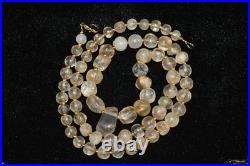
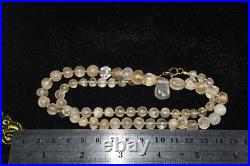
Lot of 100 Roman Bronze Coins – Unique Collection for Enthusiasts! Explore Late Roman low-grade bronze coins from AD 250 to 430, each featuring a portrait profile. Add these coins to your collection or gift them to someone starting their coin collection. Please take a look at my other listings. Small sets of coins. China, People’s Republic. Germany, Democratic Republic (DDR). United States of America. Medium sets of coins. Bulk sets of coins.
Lot of 100 Roman Bronze Coins Unique Collection for Enthusiasts
Collection-of-10-Roman-Bronze-Coins-from-the-House-of-Constantine-01-qhz

Collection of 10 Roman Bronze Coins from the House of Constantine

Collection of 10 Roman Bronze Coins from the House of Constantine

Collection of 10 Roman Bronze Coins from the House of Constantine
Collection of 10 Roman Bronze Coins from the House of Constantine. Constantine the Great, the first Christian Emperor of Rome, founded the Byzantine Empire and its capital, Constantinople. His influence makes him one of the most pivotal Roman leaders in history. In 312, during a fierce battle, he witnessed a vision of a blazing cross at noon. He saw this as divine guidance to lead a holy war, aiming to unify the Roman Empire under Christianity. With this inspiration, he triumphed over the Franks, Visigoths, and Sarmatians, greatly expanding his realm. Significantly, he issued the Edict of Milan, which legalized Christianity, collaborated with Pope Sylvester I to solidify the Papacy in Rome, and oversaw the construction of the Old St. Peter’s Basilica, the Church of the Holy Sepulchre, and the Arch of Constantine. Upon ascending the throne after his father, Constantius I Chlorus, he faced a chaotic Rome. His reign restored stability, as he defeated rivals Licinius I and II, securing his authority. His sons-Constantine II, Constans I, and Constantius II-continued the legacy of the Constantine Dynasty, which was crucial since the era of Caesar Augustus. This unique collection features ten coins: 1. Constantius I Chlorus, 305-306 2. Constantine the Great, 306-337 3. Licinius I, 308-324 4. Licinius II, 317-324 5. Constantine II, 337-340 7. Constantius II, 337-361 9. Constantius Gallus, 351-354 10. Add these coins to your collection or gift them to someone starting their coin collection. Please take a look at my other listings. Small sets of coins. China, People’s Republic. Germany, Democratic Republic (DDR). United States of America. Medium sets of coins. Bulk sets of coins.
Collection of 10 Roman Bronze Coins from the House of Constantine