
Monthly Archives: July 2026

ANTIQUE-Karl-Josef-von-Hefele-German-Catholic-bishop-CDV-PHOTO-BY-W-HORNUNG-01-tr

ANTIQUE Karl Josef von Hefele German Catholic bishop CDV PHOTO BY W. HORNUNG

ANTIQUE Karl Josef von Hefele German Catholic bishop CDV PHOTO BY W. HORNUNG

ANTIQUE Karl Josef von Hefele German Catholic bishop CDV PHOTO BY W. HORNUNG
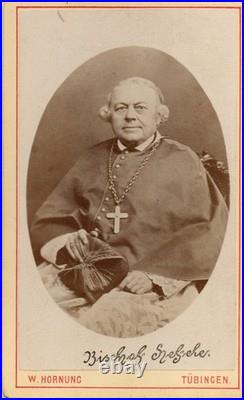
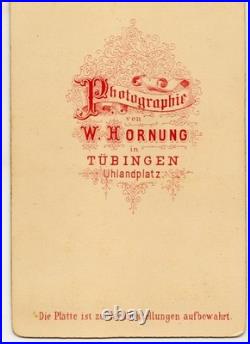
ANTIQUE Karl Josef von Hefele German Catholic bishop CDV PHOTO BY W. SIZE: 6.2 X 10.0 CM. Karl Josef von Hefele (March 15, 1809 – June 6, 1893) was a Roman Catholic bishop and theologian of Germany. Hefele was born at Unterkochen in Württemberg and was educated at Tübingen, where in 1839 he became professor-ordinary of Church history and patristics in the Roman Catholic faculty of theology, while collaborating along with William Robinson Clark to his major work. From 1842 to 1845 he sat in the National Assembly of Württemberg. In December 1869 he was enthroned bishop of Rottenburg. His literary activity, which had been considerable, was in no way diminished by his elevation to the episcopate. By John Dalton, 1860; and his still more celebrated Conciliengeschichte (History of the Councils of the Church), in seven volumes, which appeared between 1855 and 1874 Eng. Hefele’s theological opinions inclined towards the more liberal school in the Roman Catholic Church, but he nevertheless received considerable signs of favour from its authorities and was a member of the commission that made preparations for the Vatican Council of 1870. On the eve of that council, he published at Naples his Causa Honorii Papae, which aimed at demonstrating the moral and historical impossibility of papal infallibility. About the same time, he brought out a work in German on the same subject. He took rather a prominent part in the discussions at the council, associating himself with Félix Dupanloup and with Georges Darboy, archbishop of Paris, in his opposition to the doctrine of Infallibility, and supporting their arguments from his vast knowledge of ecclesiastical history. In the preliminary discussions he voted against the promulgation of the dogma. He was absent from the important sitting of June 18, 1870, and did not send in his submission to the decrees until 1871, when he explained in a pastoral letter that the dogma “referred only to doctrine given forth ex cathedra, and therein to the definitions proper only, but not to its proofs or explanations”. In 1872 he took part in the congress summoned by the Ultramontanes at Fulda, and by his judicious use of minimizing tactics he kept his diocese free from any participation in the Old Catholic schism. The last four volumes of the second edition of his History of the Councils have been described as skillfully adapted to the new situation created by the Vatican decrees. During the later years of his life, he undertook no further literary efforts on behalf of his church but retired into relative privacy. Within 24 hours the items won are sent to winners. And please keep in mind that I cannot influence any speed loss products reaching the destination. Please if you have any questions do not hesitate to contact me. Sometimes mistakes are made so. Please contact me if you have any problems and I’m sure we can work it out. Thank you for your time and interest in my auctions. Please watch my other auctions. I stand behind my goods, so you can shop at my store with confidence.
ANTIQUE Karl Josef von Hefele German Catholic bishop CDV PHOTO BY W. HORNUNG
Antique-Optometrist-s-trade-advertisement-sign-specs-clinic-hospital-sign-01-eah

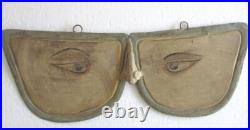
Antique Optometrist’s trade advertisement sign specs clinic hospital sign

Antique Optometrist's trade advertisement sign specs clinic hospital sign

Antique Optometrist's trade advertisement sign specs clinic hospital sign
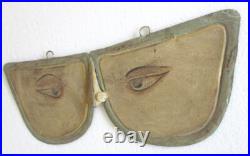
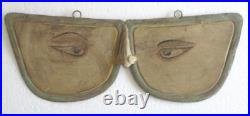
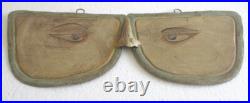
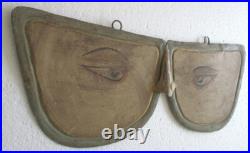
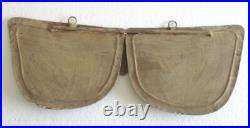
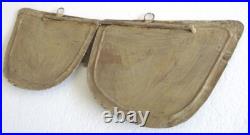
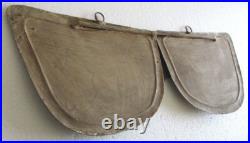
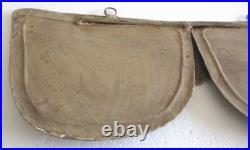
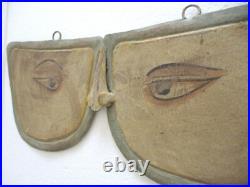
Fine iron hand made optometrist’s trade / clinic / hospital display sign specs from 1950c. The specs has a nose and the borders are embossed. The top has two rings for hanging. The sign shows wear as per age. Please see pictures for fine details, exact age and wear. The approximate size is 6.50 x 16.75 x 0.60 inch. Ref : 1231 / 23124.
Antique Optometrist's trade advertisement sign specs clinic hospital sign
Judaean-Bronze-Calligraphic-Signet-Ring-with-Aramaic-Pseudo-Kufic-Inscription-01-xpvi

Judaean Bronze Calligraphic Signet Ring with Aramaic / Pseudo-Kufic Inscription

Judaean Bronze Calligraphic Signet Ring with Aramaic / Pseudo-Kufic Inscription

Judaean Bronze Calligraphic Signet Ring with Aramaic / Pseudo-Kufic Inscription
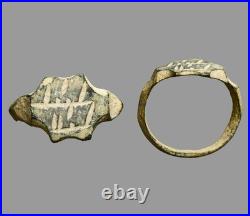
Judaean Bronze Calligraphic Signet Ring with Aramaic / Pseudo-Kufic Inscription (Circa 8th-11th Century AD) US Size 7 Authentic. This artifact is certified authentic and will be accompanied by a Certificate of Authenticity and Provenance. All professional inventory is vetted through recognized platforms to ensure legal standing. Object: Calligraphic / Administrative Signet Ring. Culture: Early Islamic / Post-Byzantine Levant (Judaea). Form: Hexagonal/scalloped bezel with incised linear script across a central ground, flanked by pointed shoulders and an integrated hoop. Ring Size: US Size 7. Region: Judaea / Holy Land Finds. Epigraphic Analysis: The Administrative Seal. This US Size 7 bronze signet ring represents the ongoing epigraphic traditions of the Levant during the Early Middle Ages. The Inscription & Bezel: The distinct scalloped, six-pointed bezel features a multi-line linear inscription divided by a prominent horizontal baseline. Executed in a stylized, geometric script-typical of late Aramaic influence or early angular Kufic-it served as a personal name seal or administrative token for marking clay and wax. Architectural Shoulders: The bezel is framed by raised, pointed triangular shoulders that transition smoothly into a rounded band, offering structural reinforcement for pressing seals into documents or jar stoppers. Function: Personal signets were essential items in merchant and civic life across early medieval Judaea, functioning as portable signatures to secure contracts, goods, and personal correspondence. Overview and Historical Context. Following the administrative transitions in the Holy Land from Byzantine to Islamic rule, local workshops continued to produce bronze signets for a diverse population. The blend of traditional regional ring architectures with early epigraphic scripts highlights the continuous commercial vitality of Judaean trade centers like Jerusalem, Ramla, and Tiberias. This ring stands as a tangible survivor of daily economic and administrative activity in the region. Patina: Displays a well-preserved, layered mottled dark forest-green and slate patina, highlighted by heavy, natural cream-colored earthen caliche settled deep within the incised characters. Mineralization: Authentic copper-oxide pitting and micro-crystallization are present across the band and under the bezel, consistent with long-term burial in mineral-rich Levantine soil. Construction: Exhibits manual casting marks and subtle hand-finished asymmetry along the profile of the hoop and shoulders. The Israel Museum, Jerusalem: Collections of Early Islamic and Late Antique personal bronze signet rings from Levantine site excavations. The British Museum, London: Accession No. 1917,0501.812 (Bronze signet rings with geometric and calligraphic bezels from the Near East). Museum of Islamic Art, Cairo: Holdings of early medieval bronze personal seals and inscribed rings from the Levant. The bronze is structurally sound and rigid, making the ring fully wearable. The epigraphic script is deeply cut and remains exceptionally crisp under a natural, museum-grade patina.


Judaean Bronze Calligraphic Signet Ring with Aramaic / Pseudo-Kufic Inscription
Authentic-Ancient-Egyptian-Antiques-Pharaoh-King-Stone-Statue-Figure-BC-01-cc

Authentic Ancient Egyptian Antiques Pharaoh King Stone Statue Figure BC

Authentic Ancient Egyptian Antiques Pharaoh King Stone Statue Figure BC

Authentic Ancient Egyptian Antiques Pharaoh King Stone Statue Figure BC
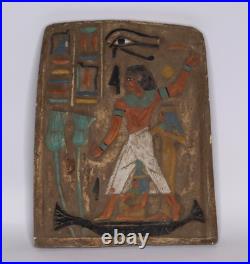
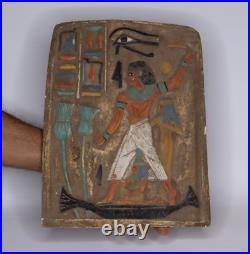
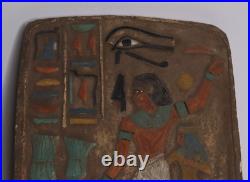
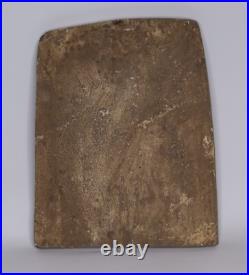
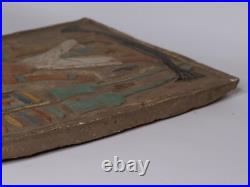
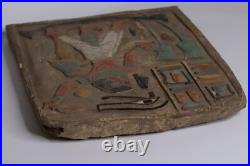
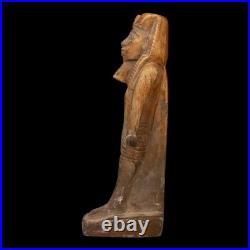
Authentic Ancient Egyptian Antiques Pharaoh King Stone Statue Figure BC. Up for Sale. A Rare and Authentic Ancient Egyptian Pharaoh Statue, skillfully carved in stone and depicting a standing royal figure in traditional pose. The figure displays detailed facial features, headdress, and body proportions that reflect the artistic style of ancient Egyptian royal sculpture. Pharaoh figures symbolized power, divine authority, and the connection between the gods and the people. Such statues were created to honor rulers and preserve their presence for eternity. About Kingship in Ancient Egypt. Pharaohs were considered divine rulers, acting as intermediaries between gods and humans. Statues of kings were placed in temples and tombs to ensure their legacy and eternal life. Customer Service Promise. Your satisfaction is our #1 priority. We provide professional support and quick responses to all inquiries. Authenticity & Quality. Every item is offered as a genuine collectible antique, ideal for collectors and enthusiasts. Size & Details. Please check photos for size reference – each piece is shown hand-held for accurate scale.
Authentic Ancient Egyptian Antiques Pharaoh King Stone Statue Figure BC