



Daily Archives: August 13, 2026

Roman-Bronze-Incendiary-Fire-Arrowhead-Phalarica-or-Malleolus-Type-Antiquity-01-ry

Roman Bronze Incendiary / Fire-Arrowhead (Phalarica or Malleolus Type) Antiquity

Roman Bronze Incendiary / Fire-Arrowhead (Phalarica or Malleolus Type) Antiquity

Roman Bronze Incendiary / Fire-Arrowhead (Phalarica or Malleolus Type) Antiquity
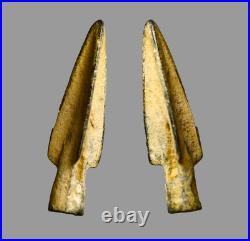
Roman Bronze Incendiary / Fire-Arrowhead (Phalarica or Malleolus Type) (Circa 1st-3rd Century AD) 35mm Authentic. This artifact is certified authentic and will be accompanied by a Certificate of Authenticity and Provenance. All professional inventory is vetted through recognized platforms to ensure legal standing. Object: Incendiary Arrowhead (Phalarica / Fire-Holding Bolt). Date: Circa 100-300 AD. Form: Trilobate / hollowed-channel projectile point designed to hold incendiary materials. Region: Imperial Roman Provinces / Frontier Finds. Typological Analysis: Ancient Incendiary Warfare. This 35mm bronze projectile is a specialized military point designed specifically for incendiary warfare. The Fire-Holding Design: Unlike conventional solid armor-piercing or barbed arrowheads, this point features deep, wide open channels along its faces. These recesses served as reservoirs to hold combustible pitch, tow, resin, or naphtha-soaked fibers without blowing out during flight. Tactical Function: Used primarily during siege operations or naval engagements, these “fire arrows” (malleoli) were fired into wooden fort structures, siege engines, or enemy sails to ignite blazes behind enemy lines. Socketed Base: Features a hollowed socket designed to take a wooden shaft, secured to withstand the violent launch forces from a composite bow or specialized torsion artillery frame. Overview and Historical Context. Incendiary weapons played a crucial role in Roman siegecraft and frontier defense. Classical authors like Ammianus Marcellinus describe the specialized construction of malleoli, noting that once ignited, the burning pitch contained within the recessed blades was extremely difficult to extinguish with water. This 35mm specimen is a remarkable survival of ancient tactical engineering, reflecting the specialized hardware used by Roman archers (sagittarii) across the garrisons of the Empire. Patina: Displays a well-preserved, layered desert-tan, sand-colored caliche, and olive-green patina, typical of long-term burial in mineral-rich soils. Mineralization: Deep-seated oxidation, heavy earthen deposits, and ancient pitting are deeply embedded within the fire-holding channels. Construction: Exhibits minor asymmetries in the blade casting and socket rim consistent with Roman field-armory production techniques. The British Museum, London: Accession No. 1883,1213.62 (Roman incendiary and trilobate military arrowheads). Römisch-Germanisches Zentralmuseum (RGZM), Mainz: Specialized holdings of Roman siege equipment and projectile points. Saalburg Roman Fort Museum, Germany: Extensive collection of military ironwork and bronze archer equipment from the Limes. Very fine archaeological condition. The bronze is structurally sound and rigid. The fire-holding channels are sharply defined, and the socket remains intact under a natural, museum-grade patina.
Roman Bronze Incendiary / Fire-Arrowhead (Phalarica or Malleolus Type) Antiquity
Antique-Dutch-Wooden-Clogs-Holland-Hand-Carved-Work-Shoes-Folk-Art-Primitive-01-qla

Antique Dutch Wooden Clogs Holland Hand Carved Work Shoes Folk Art Primitive

Antique Dutch Wooden Clogs Holland Hand Carved Work Shoes Folk Art Primitive

Antique Dutch Wooden Clogs Holland Hand Carved Work Shoes Folk Art Primitive
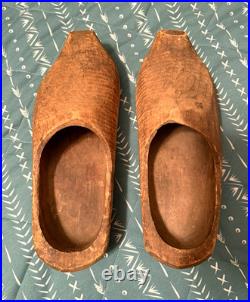
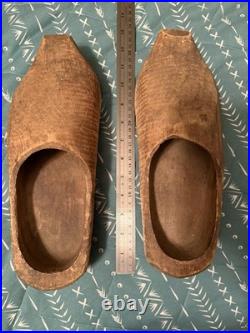
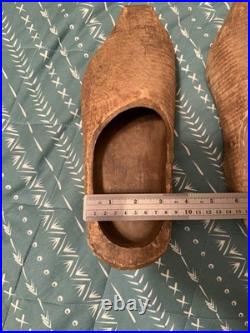
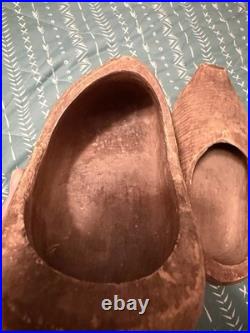
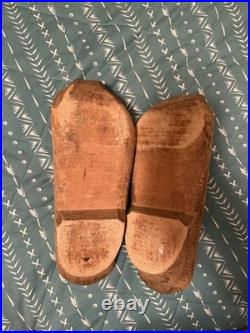
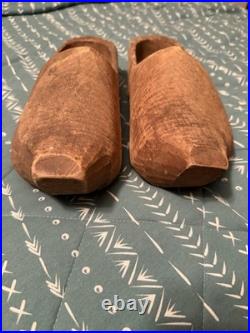
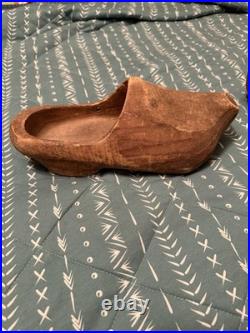
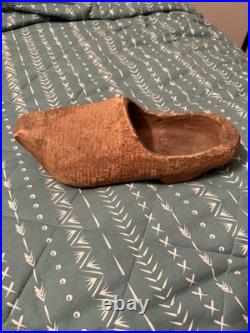
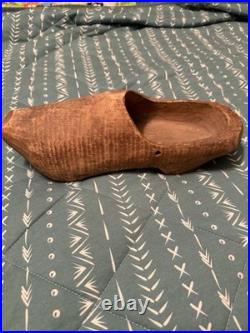
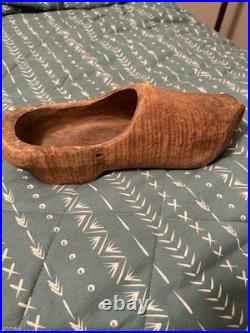
Wonderful pair of antique wooden clogs from Holland, displaying the heavy wear and character expected from traditional working footwear. These are solid wood clogs with hollowed interiors, raised heels and traditional curved/pointed toes. The wood has developed an excellent naturally aged surface and patina from years of use. One of the most interesting features is the original stamped marking inside the clog, supporting the Holland/Dutch origin. These appear to be genuine utilitarian wooden footwear rather than newer decorative souvenir clogs. The small holes located along the inside-facing sides of the shoes appear intentional and may have originally been associated with an attached component or the construction of the footwear. Approximate era: Late 19th to early 20th century Origin: Holland / Netherlands Material: Solid wood Style: Traditional Dutch work clog / folk footwear Great for. European folk-art collection. Primitive/antique décor. Dutch heritage collection. Wooden shoe collection. Farmhouse or rustic décor. Historical footwear collection The considerable wear is part of the appeal of this pair-they have the appearance of clogs that were genuinely worn and used rather than simply made as decorations.
Antique Dutch Wooden Clogs Holland Hand Carved Work Shoes Folk Art Primitive