
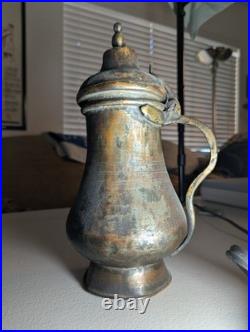
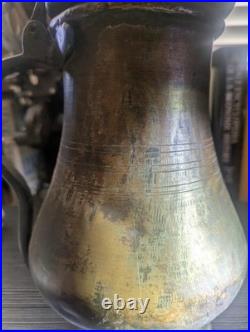
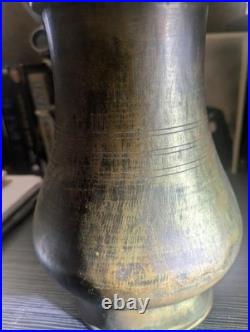
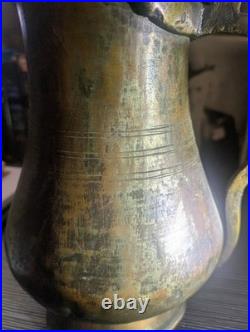
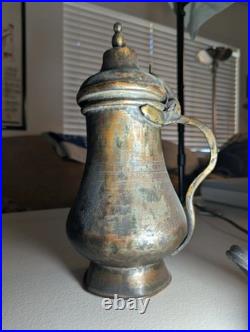
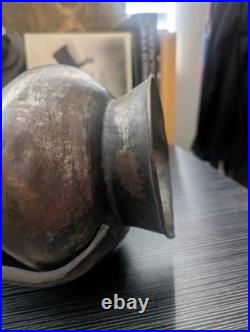
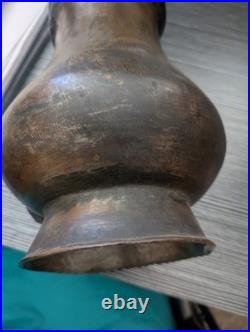
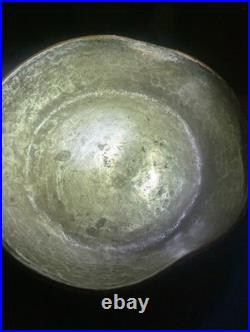
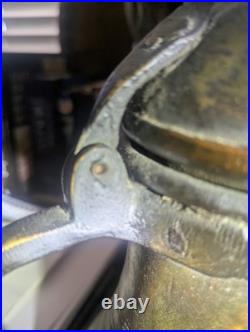
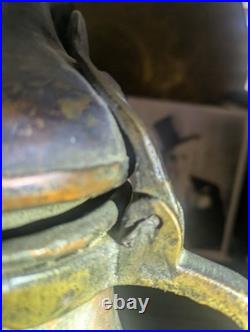
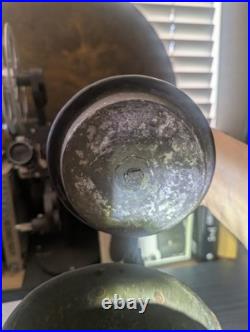
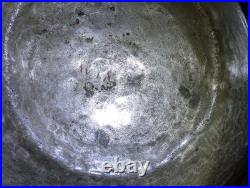
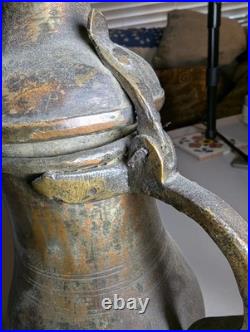
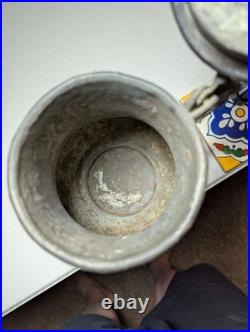
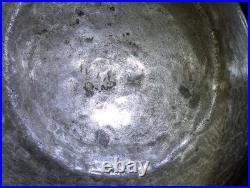
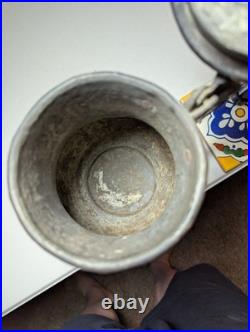
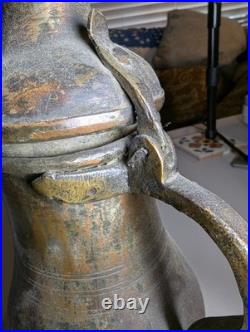

Some antiques announce themselves with a maker’s name and a tidy row of hallmarks. Others make you work for the story. This wonderful old lidded pitcher belongs firmly in the second category. Dating to approximately c. Close examination of the piece reveals how it was made. The body displays concentric forming and spinning marks; the hollow pedestal foot was manufactured separately and joined to the vessel; the lid and fittings were individually fabricated; and the remarkably sturdy hinge assembly uses mechanically fitted and peened hardware rather than modern standardized fasteners. Riveted fittings, old soldered or brazed joints, and irregular hand-finished surfaces remain visible throughout. The pitcher also retains traces of an older surface coating or plated finish over the brass-colored base metal. We have deliberately left this unidentified rather than making an unsupported claim that it is silver or nickel plate. Areas of wear reveal the warm yellow copper-alloy metal beneath, along with occasional green oxidation entirely consistent with age. One particularly charming detail is a small group of incised marks inside the lower portion of the vessel. These do not appear to be conventional hallmarks and are more likely workshop or assembly marks -the sort of notation a craftsman might have made while fitting separately manufactured components together. The pitcher is unmarked as to maker or country of manufacture. Its construction is compatible with late-19th- to early-20th-century European or American metalworking, although the substantial hand-fitted hardware and workshop character make Continental European manufacture an intriguing possibility. We have chosen not to assign a country without evidence. And that is part of its appeal: this is not a reproduction wearing an artificially aged costume. Its history is written directly into the metal-in the tooling marks, worn finish, soldered joints, rivets, hinge, oxidation, and small irregularities left by the people who made and used it more than a century ago. Condition: Antique condition with substantial age-related surface wear, patination, oxidation, scratches, discoloration, and loss to the original surface finish. Brass/copper-alloy base metal is exposed in numerous areas. The lid, hinge, handle, pedestal foot, and associated fittings remain present. Construction seams, solder/brazing, rivets, tooling marks, and workshop wear are visible and are considered part of the object’s history and character. No aggressive cleaning or polishing has been performed. Please examine all photographs carefully, as they form an important part of the condition description. A handsome, honest survivor from the turn of the 20th century-and a particularly satisfying piece for anyone who enjoys antiques that still show how they were made.